In hardware design, engineers frequently run into the same painful constraints: limited board space, tight power budgets, and systems that must become operational immediately after power is applied. These requirements often conflict with one another and leave little margin for error.
The Lattice MachXO4 FPGA family was clearly designed with these challenges in mind. In short, it combines a compact footprint, extremely low power consumption, and a high level of functional integration—without compromising system stability. Let’s break down why MachXO4 is quickly becoming a preferred choice among engineers.
1. Strong Performance with Surprisingly Low Power
MachXO4 is not a “brute-force” device that simply scales resources upward. Instead, it offers a highly flexible configuration range, from 896 to 9,400 LUTs, allowing designers to select exactly what their application requires.
From a memory perspective, devices provide up to 432 kb of embedded RAM and 448 kb of User Flash Memory (UFM), which is sufficient for buffering, configuration storage, and runtime parameters.
Where MachXO4 truly stands out is power efficiency. Static power consumption can be as low as approximately 1 mW, making it an excellent fit for battery-powered designs or thermally constrained systems.
Performance is equally solid, with fabric speeds up to 150 MHz. More importantly, MachXO4 supports instant-on operation, becoming fully functional in under 5 ms after power-up—a critical advantage for power sequencing, reset control, and system supervision.
2. Hot Socketing Without the Anxiety
Engineers working on industrial or communication systems know that hot-plugging is never trivial. MachXO4 addresses this directly with optimized hot socketing behavior.
Leakage current during hot insertion is reduced to approximately 350 μA, significantly lowering the risk of device damage or data corruption when modules are inserted or removed while the system is powered. For environments that demand continuous uptime and zero unplanned downtime, this level of robustness is a major advantage.
3. Swiss-Army-Knife-Level Integration
Despite offering packages as small as 2.5 × 2.5 mm, MachXO4 integrates an impressive set of hardened features:
- Hardened IP blocks
Built-in SPI, two I²C controllers, timers/counters, and an on-chip oscillator are implemented as hard IP, meaning they do not consume programmable logic resources and are immediately available. - Wide I/O voltage support
I/O standards from 1.0 V to 3.3 V are supported, with integrated pull-down resistors that reduce external component count and simplify board layouts.
This level of integration makes MachXO4 especially attractive for space-constrained designs where every millimeter and every milliwatt matter.
4. Software Evolution Without Breaking Legacy Designs
MachXO4 is fully supported by Lattice Radiant Design Software, marking a shift away from the older Diamond environment used by MachXO2 and MachXO3.
To address concerns about existing designs, Lattice provides an official Migration Tool that enables smooth transitions from earlier MachXO families. This allows teams to upgrade performance and features without rewriting proven designs from scratch.


MachXO4 Device Feature Comparison
| Features | LFMXO4-010 | LFMXO4-015 | LFMXO4-025 | LFMXO4-050 | LFMXO4-080 | LFMXO4-110 |
|---|---|---|---|---|---|---|
| LUTs | 896 | 1,280 | 2,112 | 4,320 | 6,864 | 9,400 |
| Logic Cells | 1,100 | 1,600 | 2,600 | 5,200 | 8,300 | 11,300 |
| Embedded RAM (M9k / kb) | 7 / 64 | 7 / 64 | 8 / 74 | 10 / 92 | 26 / 240 | 48 / 432 |
| Distributed RAM (kb) | 10 | 10 | 16 | 34 | 54 | 73 |
| User Flash Memory (UFM) (kb) | 64 | 64 | 80 | 96 | 256 | 448 |
| Dual Boot | External | External | External | External | External | External |
| PLLs | 1 | 1 | 1 | 2 | 2 | 2 |
| I²C Interfaces | 2 | 2 | 2 | 2 | 2 | 2 |
| SPI Interfaces | 1 | 1 | 1 | 1 | 1 | 1 |
| Timers / Counters | 1 | 1 | 1 | 1 | 1 | 1 |
| On-Chip Oscillator | 1 | 1 | 1 | 1 | 1 | 1 |
| VCC = 2.5 V / 3.3 V | Yes | Yes | Yes | Yes | Yes | Yes |
| VCC = 1.2 V | Yes | Yes | Yes | Yes | Yes | Yes |
| Temperature Grade* | C / I / A | C / I / A | C / I / A | C / I / A | C / I | C / I |

Camera display bridging block diagram
5. Typical Use Cases
MachXO4 is well suited for a broad range of system-level tasks:
- System management
Its instant-on behavior makes it ideal for power sequencing, reset control, and fault monitoring. - Video bridging
Support for CSI-2 and DSI transmitter interfaces enables camera-to-display bridging and protocol conversion. - Motor and LED control
With integrated PLLs and deterministic logic timing, MachXO4 is commonly used for motor protection, LED dimming, and blinking control.
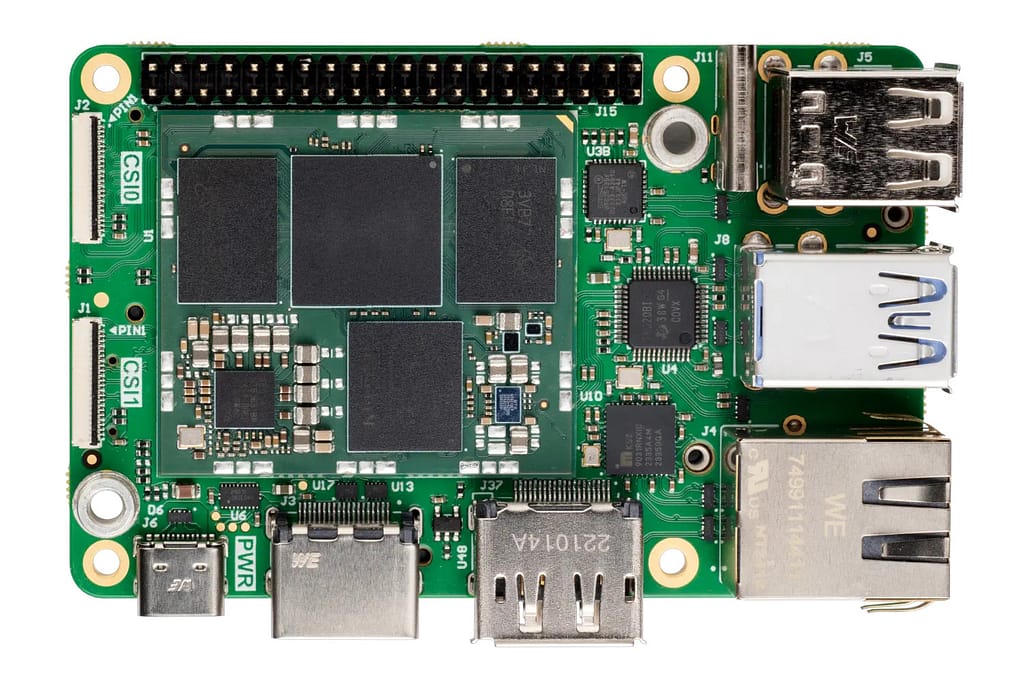
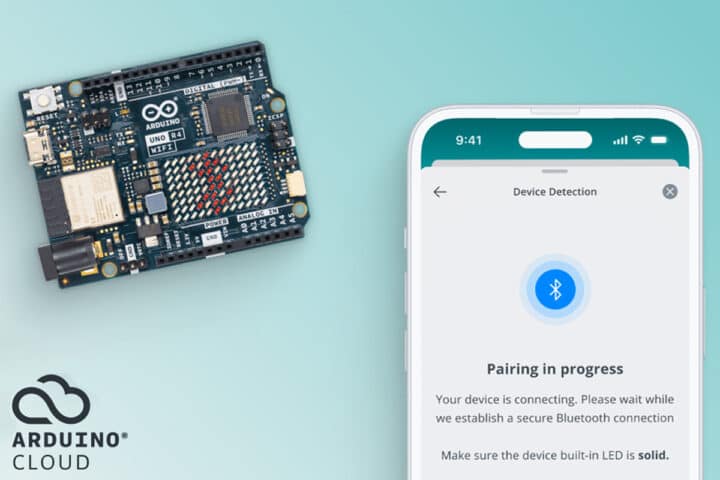
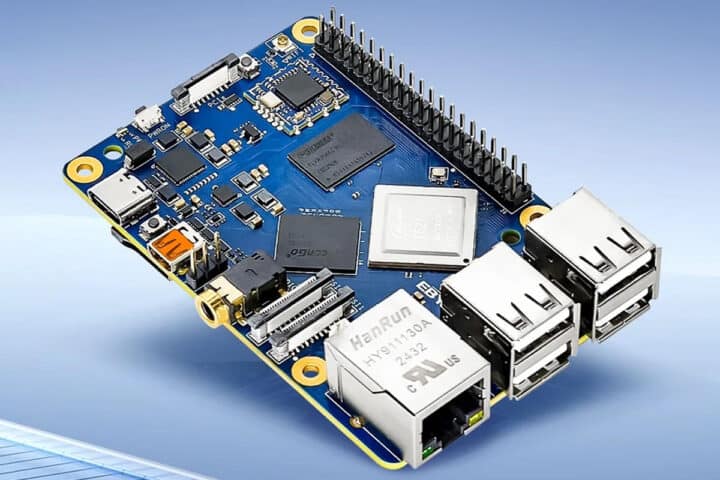
Finally, it is worth noting that Lattice guarantees a 20-year product availability for the MachXO4 family. For teams developing long-lifecycle industrial or automotive products, this long-term supply commitment significantly reduces supply-chain risk. Development boards are also readily available and include Arduino and Raspberry Pi–compatible interfaces, making evaluation and prototyping both quick and cost-effective.